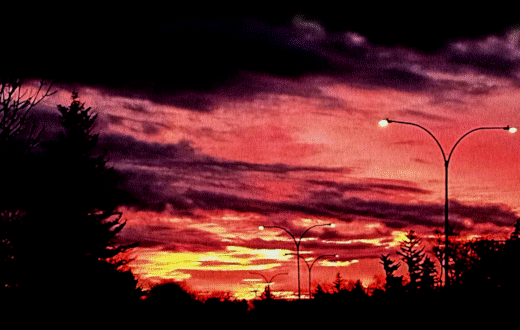
Red Light
Posted to the PARANORMALPRICKHEADS Forums by user "GoldFever."
▅▃▛▂ ▂▅▔▁▐ ▛▂ ▜▔▅ ▙▒▋▄ ▌▐ ▙▄▓ ▛ ▋▛▋ ▜▔▅ ▍▁▛▅▄ ▅▃▛▂ ▛▜▅▁▔▋▉█▅▛▔▜▘ ▄▛▅▃▄▁▓ ▛▅ ▃▒▂ ▌▄▄▜ █▃▒▜▎▄▋▓ ▛▆ ▛ ▍▄▁▄ ▒▇▛▊▄▘ ▛ ▍▔▉▇▋ ▌▄ ▊▄▁▐ █▔▜█▄▁▜▄▋▓ ▌▉▅ ▛ ▍▔▉▇▋▜▝▅ ▌▄▓ ▛ ▋▔▜▝▅ ▄▊▄▜ ▄▏▛▂▅ ▒▂ ▒▜ ▛▋▄▒ ▔▆ ▒ ▝▄▁▂▔▜ ▒▜▐▙▔▁▄▓ ▅▃▒▅▝▂ ▍▃▒▅ ▛▅ ▋▛▋ ▅▔ ▙▄▓ ▛ ▃▒▊▄ ▜▔ ▇▛▜▎▄▁▛▜▎ ▍▔▁▇▋▇▐ ▛▜▆▇▉▄▜█▄▘ ▒▜▋ ▔▜▇▐ ▙▐ ▌▁▔▅▃▄▁ ▁▄▙▄▙▌▄▁▂ ▙▄▓ ▃▄ ▃▒▂ ▒▜ ▛▋▄▒ ▔▆ ▙▄▘ ▌▉▅ ▛▅▝▂ ▜▔▅ ▙▄▓ ▍▃▔ ▍▁▔▅▄ ▅▃▛▂▗ ▅▃▄ ▙▄ ▅▃▒▅ ▋▔▄▂▜▝▅ ▄▏▛▂▅▓
I've been on a bit of a philosophical kick because of something that happened to me starting a few weeks ago. For a while I wanted to keep that experience strictly personal, but I know now that such a thing needs to be shared. Allow me the grace of being pretentious for a moment and you'll get to see what I saw.
What is the nature of fiction as opposed to reality? Obviously, for all intents and purposes, fiction is simply falsehood. It does not matter. It is not real. Lots of stories treat themselves this way, as if humbling their reality for our relief. Sometimes, they may do so out of hubris: Bugs Bunny could come out of the film to kill his animator, still blind to the fact that this animator was himself fictional. No character has ever interacted with the real world, even if they try to make you think that they can. Every time a character addresses the fourth wall, they're really just talking to an identical copy of the world you know, with the sole change being that fiction and the "real world" can in fact interact.
I said earlier that no fictional character has ever interacted with reality, but that might not be true. Mel Blanc, the voice actor for Bugs Bunny and most of the Looney Tunes, once entered a coma after a serious car accident. He was in that state for two weeks, when the doctor suddenly addressed him as Bugs. Despite being comatose, he responded in character. Or, rather, Bugs Bunny responded through him. You might be thinking that acting as Bugs Bunny had comprised so much of his life and identity that the response had become second nature--that of course it couldn't have been the actual Bugs Bunny. And yes, you're more than likely correct. Fiction only affects the world through what it means to people, a subtle but extremely substantial influence in our decisions. Characters are but ideas to us, and ideas are alive. They change in response to environmental stress and they have a reproductive mechanism.
This musing probably bores you by now, so I'll get to the point. I experienced something that made me think of all of this. It takes a really potent idea to change someone's worldview. I hope you see something from this. Don't do it, but see. It is a guide on how to talk with a fictional character. Bear with me.
What you'll need is simple: you will need some sort of media you own, and a means of editing it. The media has to be physical for the purposes of the ritual, so books are by far the easiest thing to use. I will write the rest of this under the assumption that you are following this method--if you use another medium you're on your own. If you go this route, which is what I did, you'll need correction fluid (Wite-Out) and a pen. You should also bring several small items that don't matter to you. These are gifts. For some reason, tree bark and raw meat are universally liked by the characters I've tried this with. You can use non-fiction to get insights from fictional versions of real people, but I do not recommend this, and I especially don't recommend doing this with any book of faith. Belief is a very powerful thing, and you may find that there are repercussions for recreating the Tower of Babel.
Start by finding a point in the story where the character is alone. Make sure there's enough narrative space to use the correction fluid over it. I find three long sentences or more works best, but you can use a smaller volume if it would disturb the progression of the story too much. This is done to maximize the length of your prompts and the responses you get. After you do this and let it dry, you may write a question to the character. You must write this in the format of the story and treat yourself as a character. Do not describe yourself or give yourself a name. You may only refer to yourself as "I".
The next step is the most important, and you have to get this perfect. Remove all distractions. Close your eyes. Imagine the scene just before your edited section. In the case of non-fiction, this is abstract. Any doubt in how accurate your imagination is to the story will cause this to be useless. You must fully immerse yourself. When you reach the scene you have edited, place yourself in it. Ask your question precisely as written.
Keep your eyes closed. Imagine the character responding. They will speak and no words will come out. Do not imagine them saying anything. While you're doing this, hover your pen over the rest of the blank page. Do not open your eyes. Begin writing, but put no thought into what you're writing. Focus entirely on the character talking. Eventually, they will stop. Open your eyes. You will see their response.
After you read their response, you may use your correctional fluid over the text and continue as before from there. Do note however that despite your exchange just being unwritten, future interactions will advance from the last. If you establish a bad rapport with certain characters, they will demand gifts. This is regardless of their conventional characterization. I've also found that the longer I interact with a character, strange things will begin to happen in my imagined scenes, and this is reflected in the text after the fact. My primary test book has been completely rewritten at this point.
I've noticed that there seems to be a pattern to the way their lips move. It certainly doesn't match what they respond with. And while they always seem fairly entranced, the later responses can be absolutely incomprehensible. Recently, when I went back to a scene in a tent, there was red light coming from under the flap. I couldn't help myself, so I changed what my imagined question was from what was written. The character explained that their sun was going to die soon.
My written question had changed to match what I asked. The ink was red.
I think now is a good time to explain that at no point did I feel afraid. It's hard to explain. Once you get into it, there's this sense of empty calm. I've never felt at risk, and I can stop imagining the scene at any time to stop advancing the interaction. It feels a lot like how it feels to remember a dream, just in the moment instead of in retrospect. But there are things that I don't think should be repeated.
One time a character responded by asking my name. Naturally, I answered in the next instance.
He replied and for the first time I heard a character's voice audibly. Deep rasps from his throat espoused how beautiful my name was, and how I will "keep" it. When I opened my eyes, the scene was wrong. I was sat with the book, but red light filtered in through the windows. I looked out there, and it was pitch black. Words trickled in through the window. Red words. There was knocking at the door. Knock. Knock. Knock. I hesitated. Knock. I made a few steps over. Knock knock. I opened the door. There was a man there, fist gently raised back as if to knock one final time. I looked back towards the kitchen table where my book was sat. I looked back at the man and we were sitting there with the whitened, disfigured pages laid open perfectly in the middle between us. I could smell food--porkchops I think. I could not move. There was no longer a house. He spoke kindly to me.
"We appreciate all of your hard work."
I could not see his eyes. The darkness made it seem as though there were simply holes straight through.
"But I must say that there is still one thing you must do-"
I recognized him.
"-as compensation."
I had dreamed about him.
"All I ask of you to do is create a short story."
He had introduced this method to me.
"It must come from the heart."
It was an old memory.
"This is the cost all must pay for this gift."
He asked me a question.
I answered in tranquil, hollow peace.
"You understand."
I understood. I was understood.
What deep love he had.
I opened my eyes to the kitchen table. There was a book, and a pen. I must have been sleeping for hours because dim, red light was already pouring in through the windows. I love the look of those sunsets, but only just before they disappear. If one could let it last forever they should strive to make it so. My experience was so profound that since then I've been completely overcome by this fascination with storytelling. If anything can make a moment last forever, it would be a story. I began drafting. It's funny--you may be thinking of my earlier warnings and believe that they are inconsistent with my current disposition. This is because they are. This has been very stream of consciousness, and my mind has changed as I continued writing and thought on it more. Its been a while since I started writing--it's pitch black outside--but I've never been more satisfied in my life. It's hard to explain what this all feels like, and I'm not a writer by trade. Though, there is a way for me to tell you. All you have to do is wipe over some text and ask me a question. You just have to read my lips.
(C) 2002-2021